- 9030350101
- ppkokapet@podarprep.com


Signs Your Child Is Ready for Preschool: A Parent's Checklist
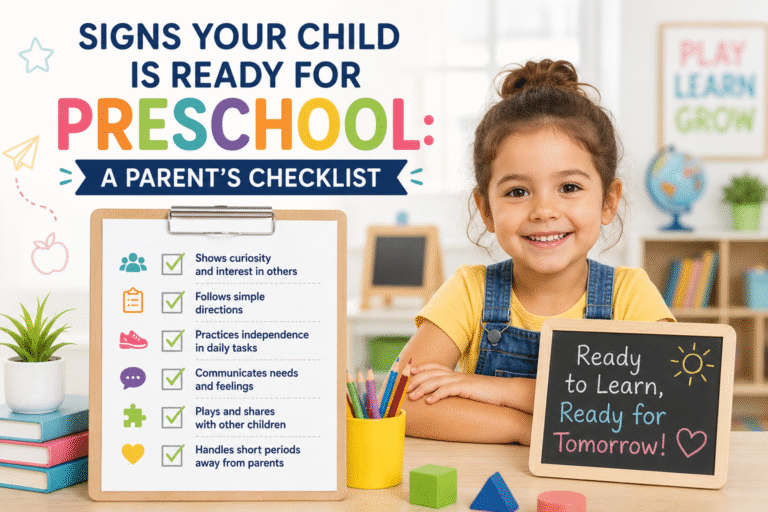
Signs Your Child Is Ready for Preschool: A Parent’s Checklist
Every parent reaches that moment, watching their toddler stack blocks, string together sentences, or march around the house pretending to be a teacher, and quietly wonders: Is it time?
Deciding when to enroll your child in a playschool in Kokapet is one of the most significant early decisions you’ll make as a parent. Go too early and the transition can feel overwhelming. Wait too long and your child may miss a critical window of social and cognitive development.
The good news? Children give clear signals when they’re ready. You just need to know what to look for.
This checklist covers the key developmental, social, emotional, and practical signs that your child is prepared to take that exciting first step, and what to consider when choosing the right early learning environment in Kokapet.
Why Preschool Readiness Matters
Starting playschool isn’t just about learning ABCs and 123s. Research consistently shows that quality early childhood education helps children develop:
- Social skills — learning to share, take turns, and make friends
- Emotional regulation — managing feelings in a group setting
- Language development — expanding vocabulary and communication
- Cognitive foundations — curiosity, problem-solving, and early literacy
- Independence — doing things for themselves with growing confidence
But all of these benefits depend on one thing: readiness. A child who is developmentally prepared for preschool will thrive. A child who isn’t ready yet may struggle unnecessarily. This checklist helps you figure out exactly where your child stands.
The Parent’s Checklist: Signs Your Child Is Ready for Playschool
1. They Show Curiosity and a Love of Learning
Does your child ask “why” constantly? Do they explore new objects, get absorbed in books, or ask questions about the world around them?
Curiosity is the engine of early learning. Children who are naturally inquisitive tend to adapt quickly to the structured-yet-playful environment of a good playschool. If your child gets excited about discovering new things, whether it’s a bug in the garden or a new puzzle, that’s a strong green flag.
2. They Can Follow Simple Instructions
Playschool teachers work with groups of children, which means your child needs to be able to follow basic two-step directions, things like “Put your shoes in the basket and sit on the mat” or “Wash your hands, then come for snack.”
You don’t need a perfectly obedient child (no such thing exists!), but a child who can hear and respond to simple instructions is much better equipped to navigate a classroom environment.
Try this at home: Give your child a two-part direction and see how they respond. If they can follow through most of the time, they’re likely ready.
3. They’re Comfortable Being Apart from You
Separation anxiety is completely normal in toddlers, but a child who is ready for playschool can tolerate being away from a parent or primary caregiver for a few hours without becoming inconsolable.
This doesn’t mean they won’t cry on the first day (many children do, and it’s absolutely fine). It means they have the emotional capacity to eventually settle, be comforted by a teacher, and engage with their surroundings even when you’re not there.
If your child spends comfortable time with grandparents, family friends, or at a daycare without persistent distress, that’s a positive sign.
4. They Show Interest in Other Children
Watch how your child reacts when they see other kids at a park or family gathering. Do they want to play near them? Do they attempt to communicate, share, or join in a game?
Parallel play, playing side by side with another child without direct interaction, is completely normal for 2–3 year olds, and a great sign of readiness. You don’t need a naturally social butterfly; even a quieter child who is curious about peers is showing the foundational interest that playschool will build on.
5. They Can Communicate Basic Needs
Your child doesn’t need to be a conversationalist to start playschool, but they should be able to express basic needs, hunger, thirst, the need to use the bathroom, discomfort, or when something is wrong.
This communication can be verbal (“I’m hungry,” “I need to go potty”) or non-verbal for children with developing speech. What matters is that your child has some way of letting caregivers know when they need something.
If your child’s speech is significantly delayed, speak with your pediatrician first, some children benefit from speech therapy before or alongside playschool enrollment.
6. They Have Basic Self-Care Skills
Playschool teachers support children, but they can’t do everything individually. A child who is ready for preschool typically has some basic self-care abilities, such as:
- Attempting to put on or remove shoes
- Washing and drying hands (with reminders)
- Eating independently (finger foods, spoon, or fork)
- Beginning stages of toilet training
Complete mastery isn’t required, most playschools in Kokapet are experienced with children at various stages of development. But some foundation of self-care independence makes the transition smoother for everyone.
7. They Have a Predictable Sleep and Eating Routine
Children who are well-rested and nourished consistently absorb learning better and manage emotions more effectively. If your child has a reasonably stable bedtime and wakes up without extreme difficulty, their body is likely ready for the rhythm of a school day.
Similarly, a child who eats reasonably well without major feeding challenges will find snack and lunch routines at playschool much easier to navigate.
8. They Engage in Pretend Play
Pretend play, using a banana as a phone, pretending to cook in a toy kitchen, acting out scenes from daily life, is a powerful developmental milestone. It signals growing imagination, symbolic thinking, and narrative understanding, all of which are foundational to early literacy and social play.
Children who engage in pretend play regularly tend to integrate beautifully into preschool environments where imaginative, activity-based learning is central.
9. They Can Sit and Focus for Short Periods
Circle time, storytime, and structured activities require a child to sit and focus for 5–10 minutes at a stretch. If your child can engage with a picture book, a puzzle, or a drawing activity for at least a few minutes without needing constant redirection, they have the attention foundation playschool requires.
You’re not looking for perfect stillness, wiggly, energetic children are absolutely normal. But the ability to redirect attention to a task is a meaningful sign of readiness.
10. You Feel Ready Too
This one doesn’t appear on most checklists, but it matters. Parents who feel confident and positive about the playschool transition communicate that energy to their children. If you’re feeling anxious, overwhelmed, or doubtful, children pick up on it and may mirror that anxiety.
Preparing yourself, visiting the school, meeting the teachers, understanding the daily routine, helps you support your child through the transition with calm reassurance rather than shared nervousness.
What If My Child Doesn’t Check Every Box?
Here’s the honest truth: very few children tick every single box before starting playschool. Readiness is a spectrum, not a threshold.
Most experienced playschools in Kokapet are designed to meet children where they are. A good early childhood educator knows how to gently support a child who struggles with separation, scaffold a child who needs help with communication, and build the social skills of a child who is shy around peers.
If your child checks most of the boxes, especially around basic communication, separation tolerance, and curiosity, they’re very likely ready to begin, even if a few areas still need development.
If you have specific concerns (developmental delays, sensory sensitivities, speech challenges), speak directly with the school before enrollment. Quality playschools welcome these conversations and can often accommodate and support a wide range of needs.
Choosing the Right Playschool in Kokapet
Kokapet has grown into one of Hyderabad’s most sought-after residential neighborhoods, and with that growth has come an excellent range of early childhood education options. When evaluating a playschool in Kokapet, here’s what to look for:
Low Child-to-Teacher Ratio
Younger children need more individual attention. Look for playschools that maintain a ratio of no more than 8–10 children per teacher, so your child gets the support and engagement they need.
Play-Based Curriculum
The best early childhood education blends structured learning with free play. Look for schools that emphasize activity-based learning, creativity, and exploration rather than rote memorization or academic pressure.
Safe and Stimulating Environment
Visit the premises before enrolling. The space should be clean, safe, age-appropriately furnished, and filled with engaging learning materials, books, art supplies, sensory activities, outdoor play areas.
Warm, Trained Teachers
Qualifications matter, but so does warmth. The best playschool teachers are patient, nurturing, and genuinely enthusiastic about working with young children. A teacher who knows each child by name and temperament makes all the difference.
Transparent Communication with Parents
Good playschools keep parents informed, through daily updates, parent-teacher meetings, and open-door policies. You should never feel left in the dark about your child’s day.
Strong Community Reputation
Ask other parents in Kokapet about their experiences. Word of mouth from families in your neighborhood is often the most reliable guide to finding a playschool that truly delivers.
How to Help Your Child Transition Smoothly
Once you’ve chosen a playschool in Kokapet, here are a few strategies to make the first few weeks easier:
Talk about it positively. In the days before school starts, talk about playschool with excitement, new friends, fun activities, interesting toys. Keep it light and positive without overselling or building unrealistic expectations.
Do a trial visit. Many playschools offer a short orientation session or trial day. Use it. Letting your child see the classroom, meet their teacher, and explore the space before the first official day significantly reduces first-day anxiety.
Create a goodbye ritual. A consistent, brief goodbye, a hug, a special wave, a phrase like “I’ll be back after snack time”, gives children a sense of security. Avoid prolonged goodbyes, which often increase rather than reduce distress.
Be consistent. Send your child every scheduled day, even if the first few days involve tears. Consistent attendance helps children adjust faster than irregular attendance.
Debrief gently at pickup. Instead of “Did you have fun?” (which invites a yes/no answer), try “What was the best part of today?” or “Tell me something you did at school.” Open-ended questions give children space to share at their own pace.
Final Thoughts
Every child is unique, and there’s no single “right age” to start playschool. What matters more than the number of candles on their birthday cake is where they are developmentally, and whether the school you choose is equipped to meet them there.
If your child is showing most of the signs on this checklist, it’s likely time to start exploring your options. The right playschool in Kokapet won’t just teach your child their colors and shapes, it will give them the confidence, curiosity, and social skills that set the foundation for a lifetime of learning.
Trust your instincts, do your research, and remember: you know your child better than anyone.
People Also Ask
Q: At what age should a child start playschool in Kokapet?
Most playschools in Kokapet accept children between the ages of 1.5 and 3 years for playgroup or nursery programs. The ideal age depends less on the calendar and more on your child’s individual developmental readiness, their ability to communicate basic needs, tolerate short separations, and engage with peers. Many parents begin with a part-time schedule around age 2 and transition to full days as the child grows more comfortable.
Q: How do I know if my 2-year-old is ready for playschool?
Key signs that a 2-year-old is ready for playschool include showing curiosity about other children, being able to follow simple two-step instructions, communicating basic needs (verbally or non-verbally), tolerating short separations without severe distress, and engaging in independent or parallel play for short stretches. No child will demonstrate every marker perfectly, readiness is a range, not a checklist that must be completed entirely before enrollment.
Q: What is the difference between a playschool and a preschool?
Playschool (also called playgroup) typically caters to younger children between 1.5 and 2.5 years and focuses almost entirely on sensory play, social interaction, and early motor development in a low-pressure environment. Preschool usually targets children aged 3–5 and incorporates more structured early learning, pre-literacy, numeracy concepts, and school readiness skills, alongside play. Many early childhood centers in Kokapet offer both programs under one roof, with a natural progression from playgroup to nursery to preschool.
Q: What should I look for in a good playschool in Kokapet?
When evaluating a playschool in Kokapet, prioritize a low child-to-teacher ratio (ideally 8:1 or better), a play-based curriculum that emphasizes learning through activity and exploration, a clean and safe physical environment, warm and trained teachers, and clear communication with parents. Visit the school in person, observe a session if possible, and speak with other parents in the area about their experiences before making your decision.
Q: How long does it take for a child to adjust to playschool?
Most children take between two and six weeks to fully adjust to playschool, though this varies widely by temperament. The first few days may involve tears at drop-off, which is entirely normal. Children who attend consistently, have a predictable goodbye routine, and feel safe and engaged typically settle faster. If your child is still significantly distressed after 6–8 weeks, speak with the school about strategies or consider whether the environment is the right fit.
Q: Should I stay with my child during the first few days of playschool?
Many playschools in Kokapet recommend a phased separation approach for the first week, a parent stays nearby for the first day or two, then gradually reduces their presence as the child settles. However, practices vary by school. Follow the guidance of your child’s teachers, who are experienced in managing transitions. Avoid lingering too long at drop-off once your child is engaged, as extended goodbyes can sometimes prolong rather than ease the adjustment period.
Q: What are the benefits of sending a child to playschool early?
Quality early childhood education offers significant long-term benefits including stronger social skills, better emotional regulation, richer language development, and a positive early association with learning environments. Children who attend playschool tend to transition more smoothly into formal schooling and often demonstrate greater confidence and adaptability in group settings. The key is finding a nurturing, age-appropriate environment, one that prioritizes play, exploration, and emotional safety alongside foundational learning.
Q: How do I prepare my child for their first day at playschool?
Start by talking about playschool positively in the weeks leading up to the start date, mention new friends, fun activities, and interesting things to explore. If the school offers an orientation visit, take advantage of it so your child sees the space before day one. Establish a short, consistent goodbye routine and stick to it. Ensure your child is well-rested and has eaten before drop-off. And most importantly, project calm confidence yourself, children read parental energy, and your reassurance is the most powerful tool in their transition toolkit.
Looking for the right playschool in Kokapet for your child? Start by scheduling a visit to Podar Prep Kokapet, asking the right questions, and trusting what you observe, a happy, welcoming classroom speaks for itself.