- 9030350101
- ppkokapet@podarprep.com


How Preschool Builds a Strong Foundation for Lifelong Learning
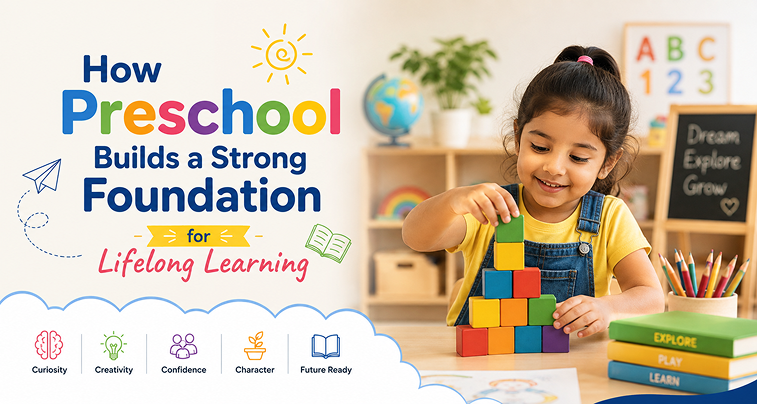
How Preschool Builds a Strong Foundation for Lifelong Learning
Choosing the right preschool is one of the most important decisions parents make during their child’s early years. Preschool is more than a place where children learn letters and numbers. It is an environment where they begin developing social skills, communication abilities, independence, curiosity, and a positive attitude toward learning.
For parents looking for a Preschool in Kokapet, understanding the long-term benefits of quality early childhood education can help in making an informed decision.
Why Preschool Is Important for Early Development
The early years of childhood are a crucial period for cognitive, emotional, social, and physical development. A well-structured preschool program gives children opportunities to learn through age-appropriate activities, play, exploration, and interaction with others.
Instead of focusing only on academic learning, a good preschool helps children develop a balanced set of skills that can support them throughout their educational journey.
1. Develops Early Learning Skills
Preschool introduces children to foundational concepts such as numbers, letters, shapes, colors, patterns, and basic vocabulary. These concepts are taught through engaging activities rather than pressure-based learning.
Storytelling, puzzles, songs, games, art, and hands-on activities can make learning enjoyable while helping children develop early literacy, numeracy, memory, and problem-solving skills.
2. Builds Communication and Language Skills
Regular interaction with teachers and classmates encourages children to express their thoughts, ask questions, listen to others, and communicate their needs.
Through conversations, storytelling, group activities, and classroom discussions, children gradually develop stronger vocabulary and confidence in communicating with others.
3. Encourages Social and Emotional Development
Preschool provides children with their first structured opportunity to interact with a larger group of peers. They learn important social skills such as sharing, taking turns, cooperating, following instructions, and resolving simple conflicts.
Children also begin understanding and managing their emotions. These experiences can help them become more confident and comfortable in social situations.
4. Promotes Independence
A quality preschool environment encourages children to complete simple tasks independently. Activities such as organizing their belongings, cleaning up after play, choosing activities, and following classroom routines help children develop a sense of responsibility.
Small achievements can also build confidence and encourage children to become more independent learners.
5. Encourages Creativity and Curiosity
Children naturally learn by asking questions and exploring their surroundings. Preschool can nurture this curiosity by providing opportunities for creative expression and discovery.
Drawing, painting, music, building activities, pretend play, experiments, and outdoor activities allow children to explore ideas while developing imagination and critical-thinking skills.
6. Prepares Children for Formal Schooling
Moving from home to a structured school environment can be a significant transition for young children. Preschool helps make this transition smoother by introducing them to classroom routines, group learning, instructions, and structured activities.
Children become familiar with concepts such as listening to teachers, completing activities, working with classmates, and managing daily routines. This preparation can help them approach formal schooling with greater confidence.
7. Develops Motor Skills
Preschool activities also support physical development. Drawing, coloring, cutting, building blocks, and other hands-on activities help strengthen fine motor skills.
Outdoor play, running, jumping, balancing, and other physical activities contribute to gross motor development while encouraging an active lifestyle.
Choosing the Right Preschool in Kokapet
When selecting a preschool, parents should look beyond academics and consider the overall learning environment. Factors such as teacher-child interaction, safety, classroom environment, curriculum, play-based learning, cleanliness, communication with parents, and opportunities for social and creative development are important.
The right preschool should provide a welcoming environment where children feel safe, supported, encouraged, and excited to learn.
Building a Foundation for Lifelong Learning
Preschool lays the groundwork for many skills that children will continue developing throughout their education and beyond. When children associate learning with curiosity, exploration, encouragement, and positive experiences, they can develop a stronger foundation for future learning.
For families exploring a Preschool in Kokapet, choosing an environment that supports the child’s academic, social, emotional, creative, and physical development can make the early learning experience meaningful and rewarding.
Conclusion
Preschool is the beginning of a child’s educational journey. With the right environment and guidance, children can develop essential skills, build confidence, discover their interests, and learn how to interact with the world around them.
A strong preschool foundation can help children enter formal schooling with greater independence, confidence, curiosity, and readiness to learn.